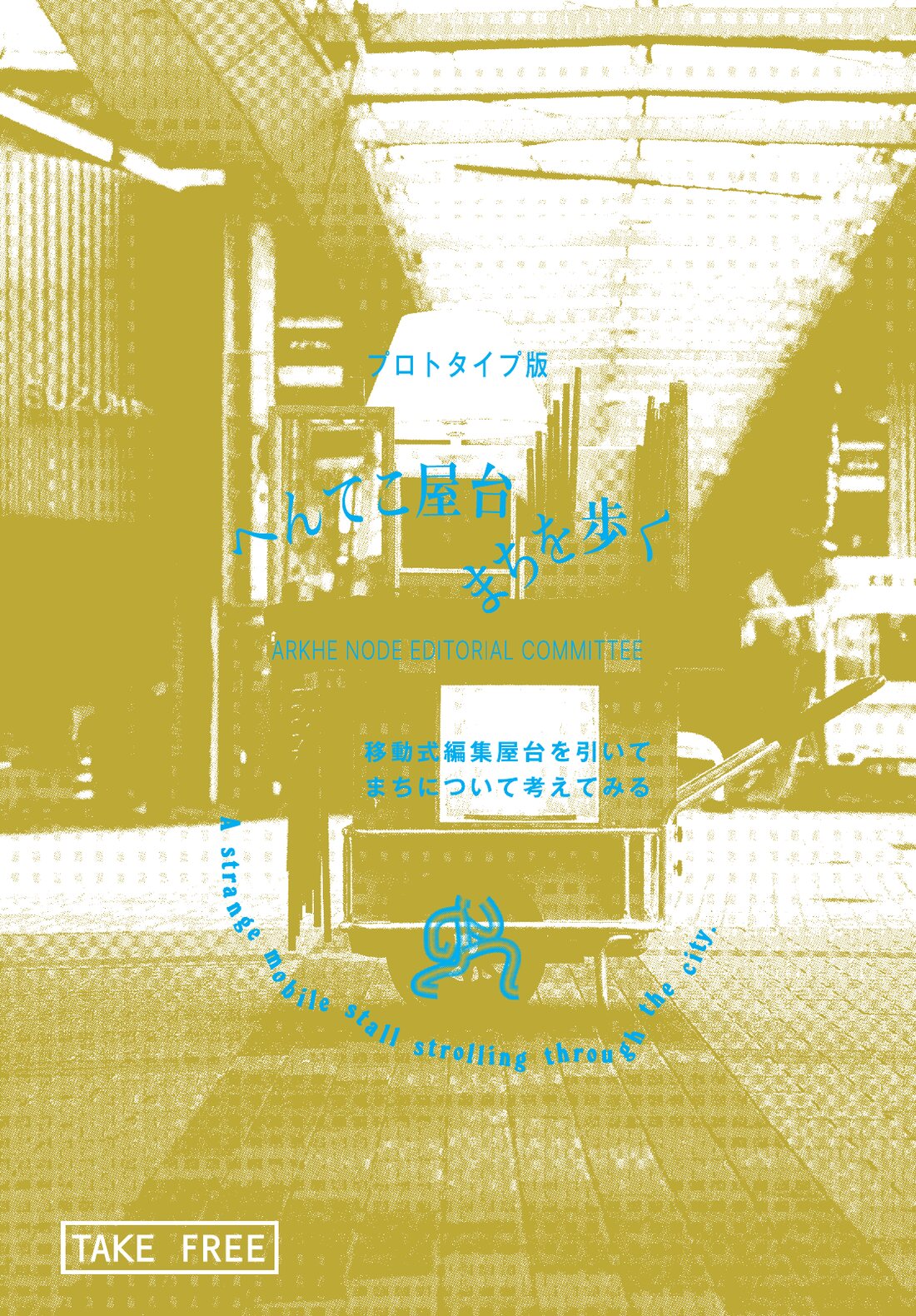
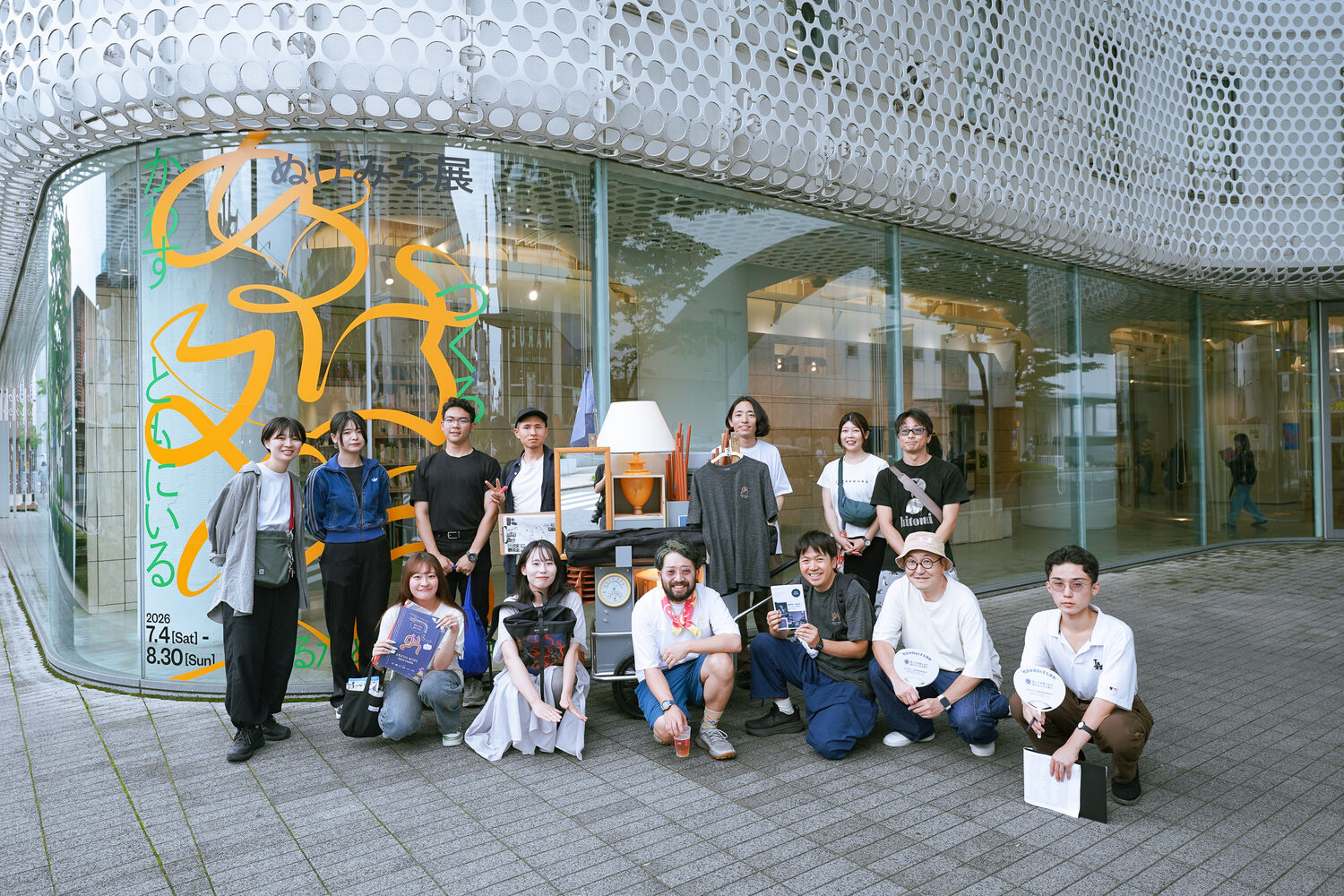
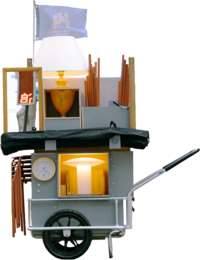
へんてこ屋台 まちを歩く
Pulling a mobile editorial cart, and thinking about a city
Published September 2026 by the ARKHENODE editorial committee.
Thirty-two pages, A5, Japanese, free.
This page carries the text and the photographs in English. The design, the
illustrations and the typesetting of the printed edition are not reproduced
here.
Foreword
ARKHENODE, the mobile open editorial meeting, is one of the community
programmes of the 1st Maebashi International Art Festival 2026. We pull a strange
cart through the centre of Maebashi, and then hold a talk session with people who
are doing things in this city. Nine sessions in all, between June and December
2026. The four we finished before the festival opened are Season 1; the five we
hold during it are Season 2.
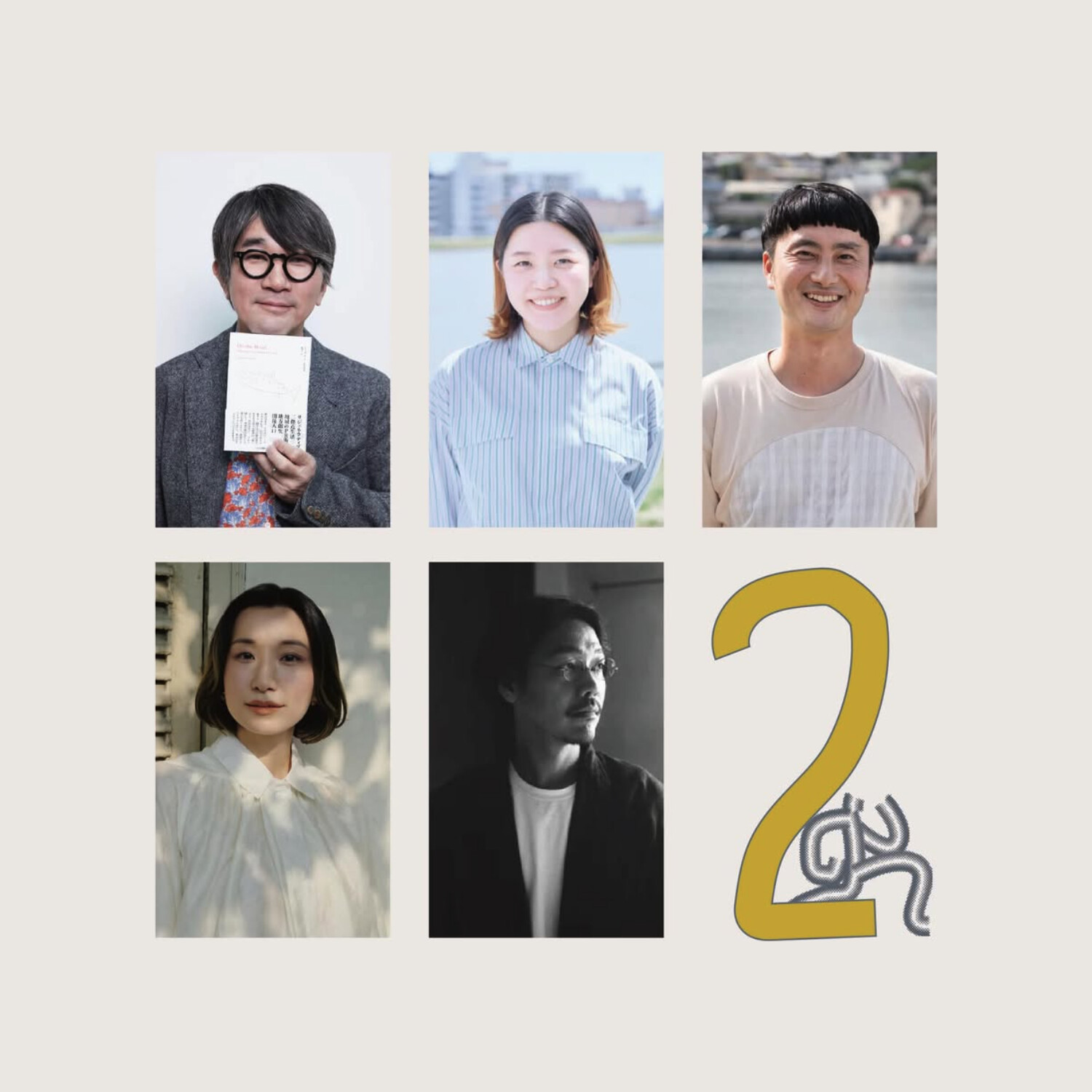
For Season 2, which begins in October, we welcome five guests who practise
editing rooted in their own regions, from all over Japan.
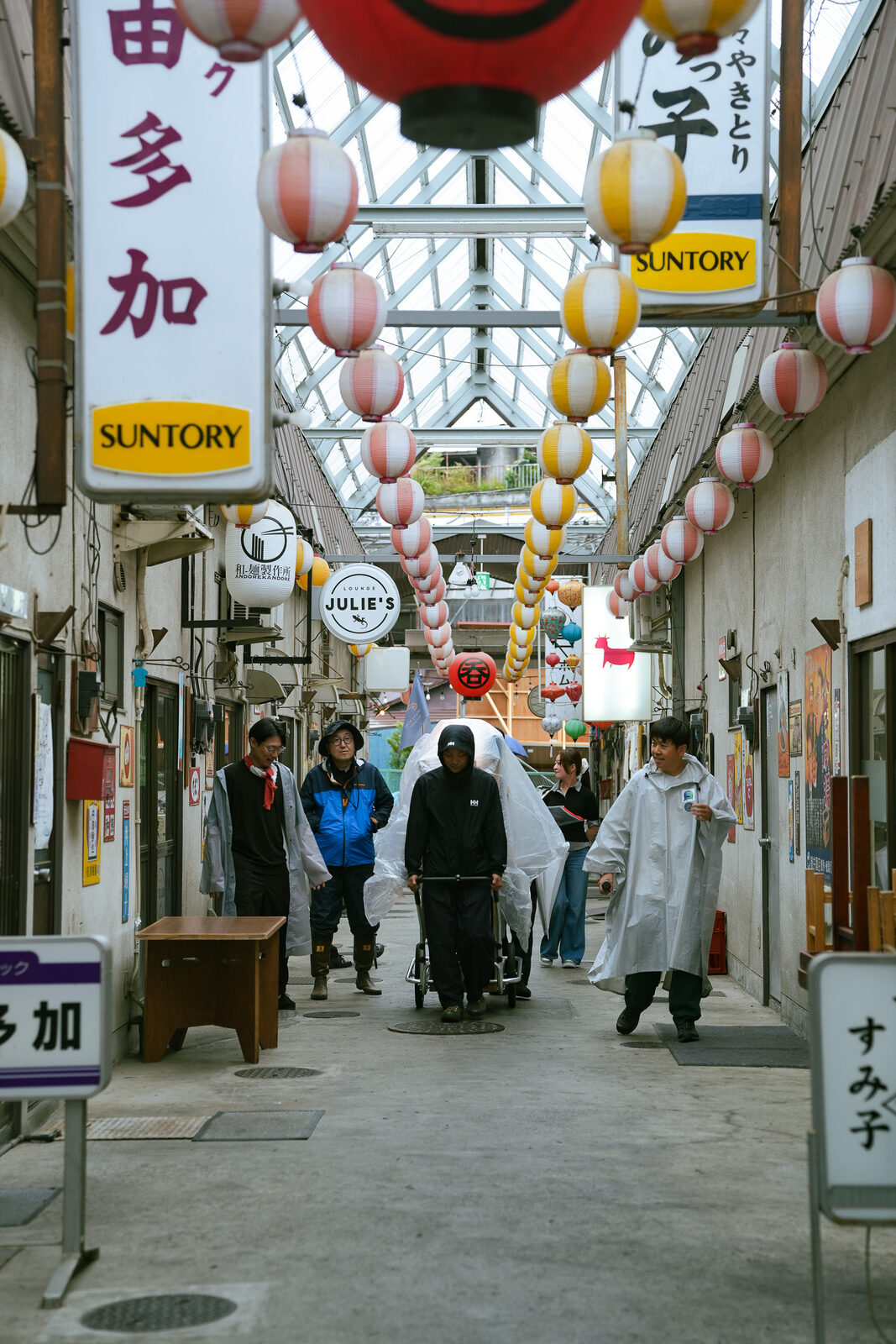
Across Season 1, from June to July, it rained on two of the four days, and
the clear ones were brutally hot. Ten local guests, in eight groups, gave us a great
deal of their time. We are genuinely grateful. This booklet was made to hand the
memory of that season on to the guests of Season 2.
Season 2 runs from October to December, five sessions. The full edition of the
zine is planned for spring 2027, after Season 2 ends.
ARKHENODE editorial committee
About ARKHENODE
Walking and making a book, and what that shows you
ARKHENODE is a participatory mobile open editorial meeting. Ryuta Tanaka, the
city’s Machistant, pulls a cart through the streets, holds a talk with a
guest at the end of the walk, and the record of it is woven into a single
zine.
The name is made up. ARKHĒ is ancient Greek for origin or beginning, and
it sounds like aruke, the Japanese imperative for “walk.”
NODE means a joint, a knot in a network, and it sounds like noudo,
density. What we meet by walking, we put into words and tie together.
ARKHĒ origin, walk → the city walk
NODE node, density → the talk
Walk, listen, weave. Out of what is made on the spot, we make a book.
Machistant is Maebashi’s own coinage for the person who
supports people starting businesses in the city centre. Ryuta Tanaka has been
involved in around sixty openings in five years.
Season 1
Four sessions, June and July 2026
Session One · 13 June 2026 · Megrem studio
The edge of the city, the riverside, music
“Maebashi smells of culture.”MEG — Megrem studio
“Break through on the one thing you love.”Yasuhiro Kondo — Gourmand Curry
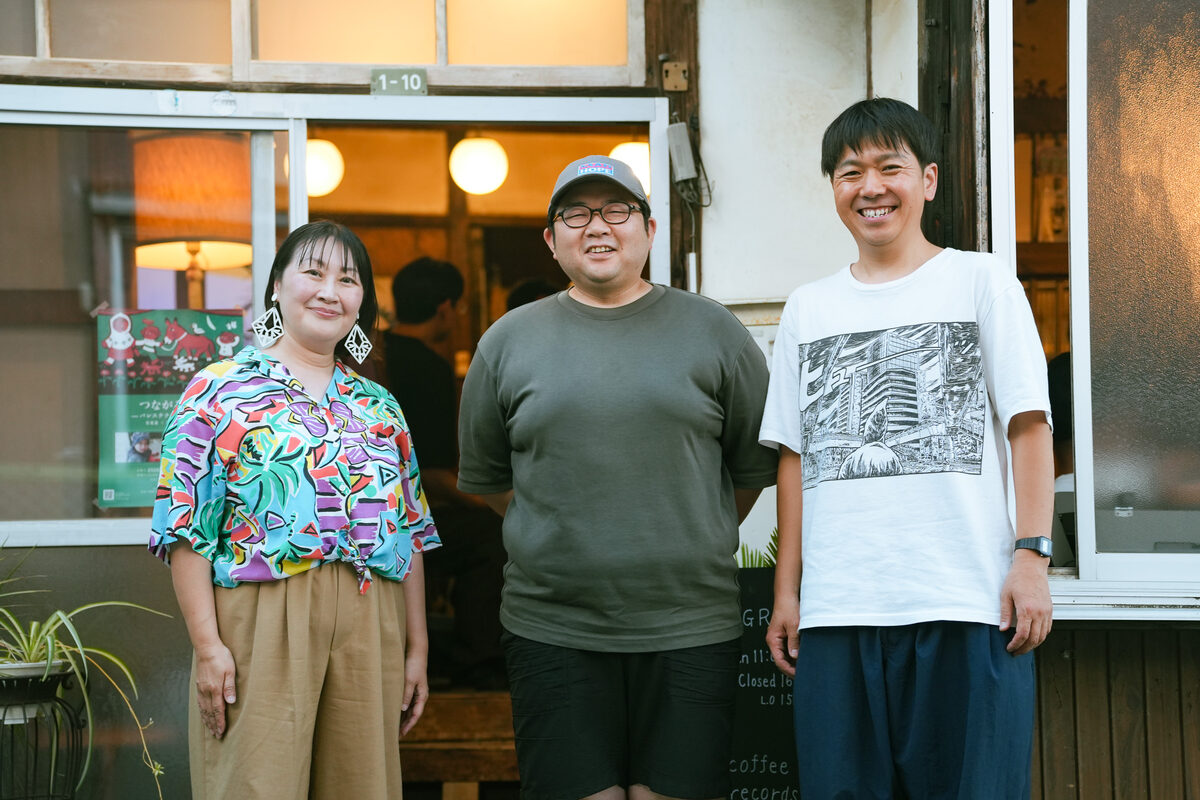
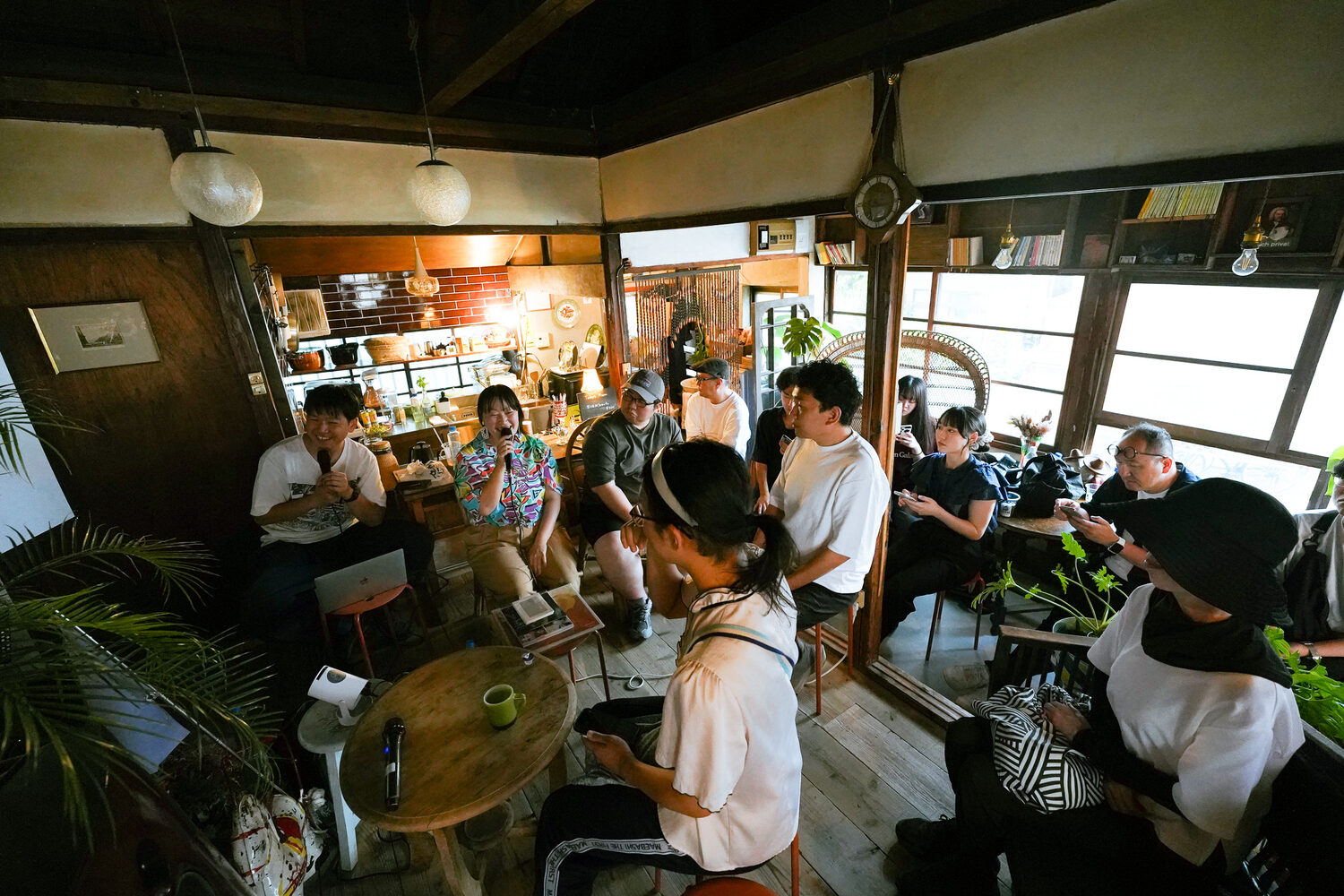
Kondo makes unreasonably good curry at Gourmand Curry, on the Hirose River. MEG used to sing for Minyo Crusaders, the band that rearranges Japanese folk songs into something ferocious. The shop and the house studio are both open to the street, and both pull music into Maebashi. We wanted to think about what music does to a city, and what it does to a shop.
Yasuhiro KondoOwner, Gourmand Curry / organiser of Magic HourRuns the popular curry shop by the Hirose River. Puts on talks and live music inside it.
MEGOwner of Megrem / DJFormer vocalist of Minyo Crusaders. Rebuilt an old house downstream on the Baba River, by hand, into a studio and café.
Session Two · 20 June 2026 · Yaya
An architect and a restaurateur, each looking at the same streets
“Maebashi is dense.”Yuto Kogure — AANE / IINE
“The city is enjoying itself.”Yusaku Arai — AANE / IINE
“Everything except the money is one hundred per cent me.”Minami Tamahashi — Hazumi
Kogure and Arai keep producing good-looking shops while they look for alternatives to the usual relationship between a city and its architecture. Tamahashi stands behind the counter at Laugh Coffee, which has become the community hub of Chuo-dori. All three work on what you might call the hardware side of the city. We wanted to know how the centre looks from there. A lot of it you could not hear anywhere else.
Yuto Kogure and Yusaku AraiArchitecture collective AANE / property company IINEThey design everything from houses to shops, and recently started a property arm that puts empty buildings and people together.
Minami TamahashiHazumiLaugh Coffee, Willow Popcorn, Yunagi. She keeps making the shops that give young people a reason to come into town.
Session Three · 4 July 2026 · Bentena SHOP
Two people who have been involved with the city centre since they were students
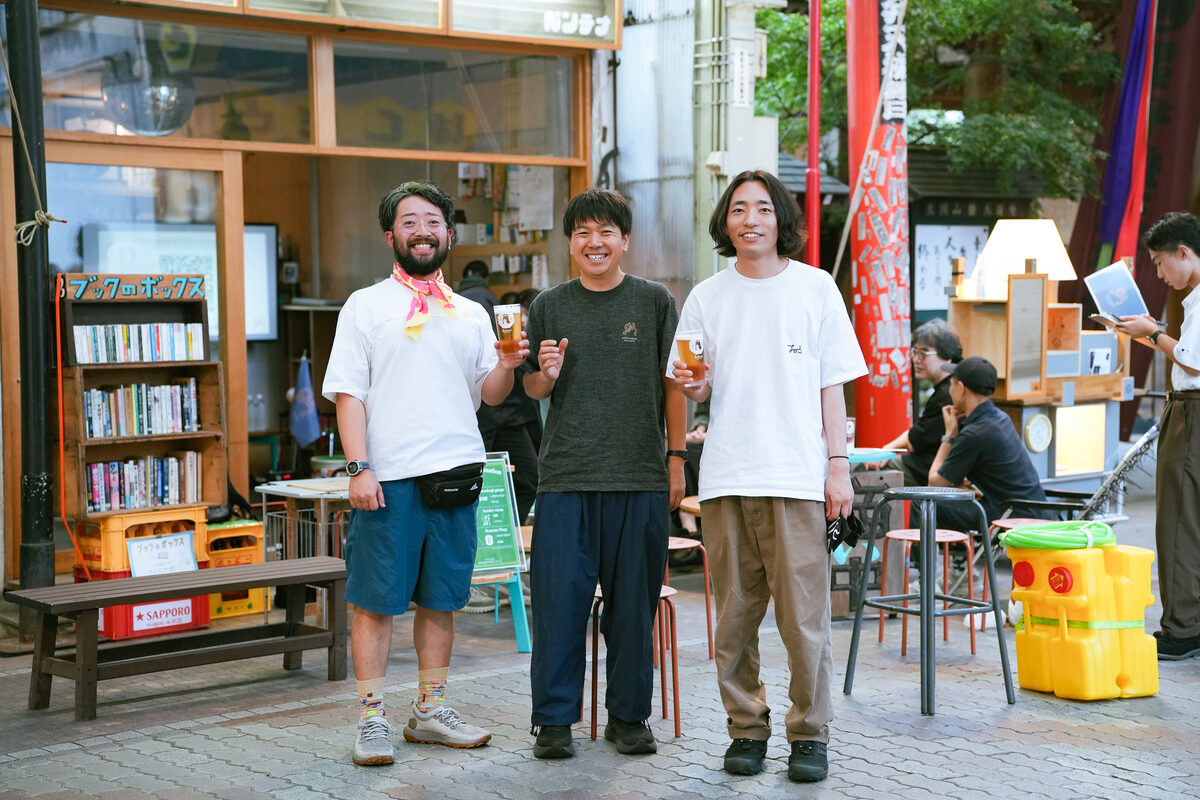
“I run Lululu so the energy keeps passing on.”Yakuto Takeuchi — Lululu na Beer
“I want to leave traces of the people I looked up to.”Tomohiro Okada — MaebashiWorks / tos / Bentena SHOP
Takeuchi runs Lululu na Beer, the first microbrewery in central Maebashi. Okada is an architectural designer who runs Bentena SHOP, the culture spot on Benten street. Both arrived from outside the prefecture, got pulled in by the people who were here first, and stopped being participants and started being residents. Listening to them, you notice that what this city is for keeps changing, year by year.
Yakuto TakeuchiOwner, Lululu na Beer / copywriterOwner of the only craft brewery in the city centre, and the man behind a long list of local projects.
Tomohiro OkadaMaebashiWorks / tos / Bentena SHOPAn architectural designer based in the centre. Runs a gallery, a shop and a hoppy stand. Always somewhere in town.
Session Four · 18 July 2026 · hengeni
The Ura-Benten counterattack
“Trial and error at one hundred per cent purity.”Shintaro Kanayama — hengeni
“A place where you accidentally meet all sorts of adults.”Anna Kanayama — hengeni
“The back in Ura-Benten was the good part.”Yasuhira Noguchi — CASA FRESCO
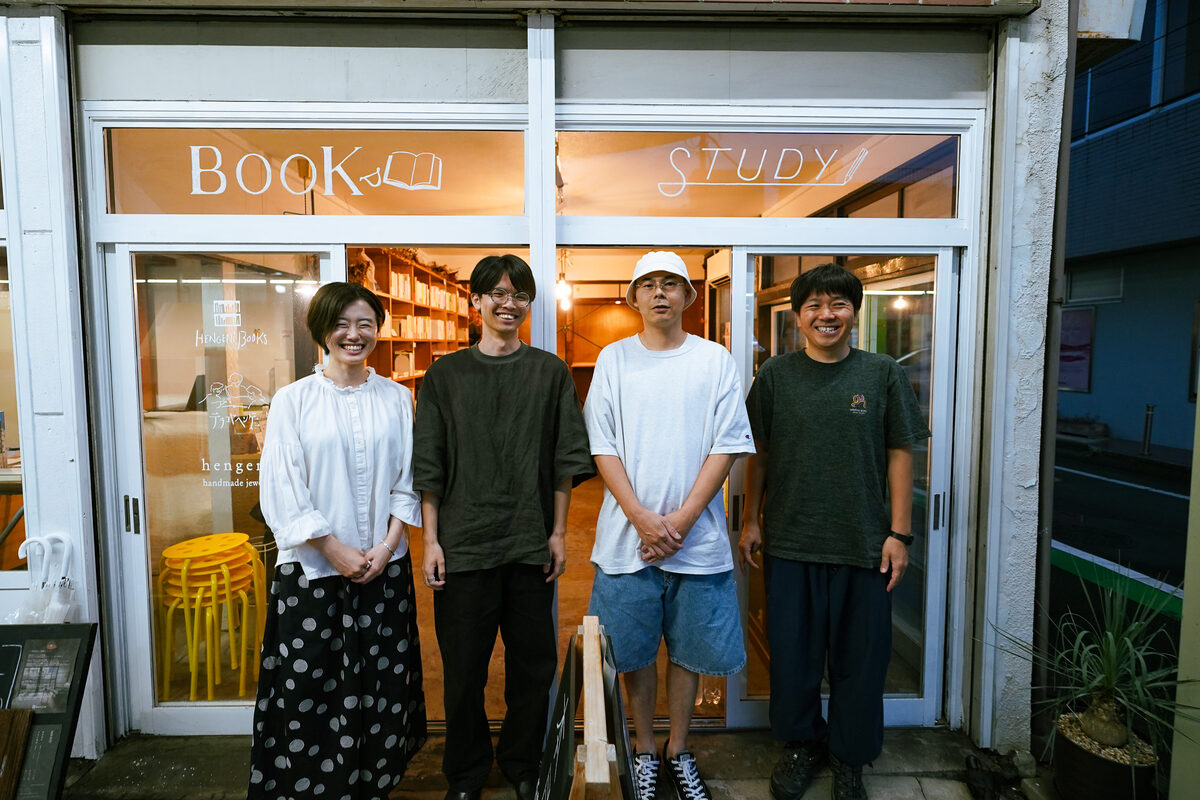
The Kanayamas run hengeni, which is a bookshop, a café, a cram school and a jewellery atelier at once. Noguchi runs CASA FRESCO, a Spanish bar that is both stylish and extremely welcome. Around those two, on Ura-Benten street, a gallery and a vintage shop and others have started to form something like an ecosystem. Too many things are happening in this city centre at the same time to sum it up in one line. How you walk it is up to you.
Shintaro Kanayama and Anna KanayamahengeniA married couple running a building that is a bookshop, a place to study and an atelier. The youngest guests in this project.
Yasuhira NoguchiCASA FRESCOSpanish food on Ura-Benten street. Music, fashion and art spill out of the room. The start of a line you can follow through the city.
The record booklet made after each session is available as a PDF,
in Japanese. Session records
Roundtable
What was that strange mobile stall carrying?
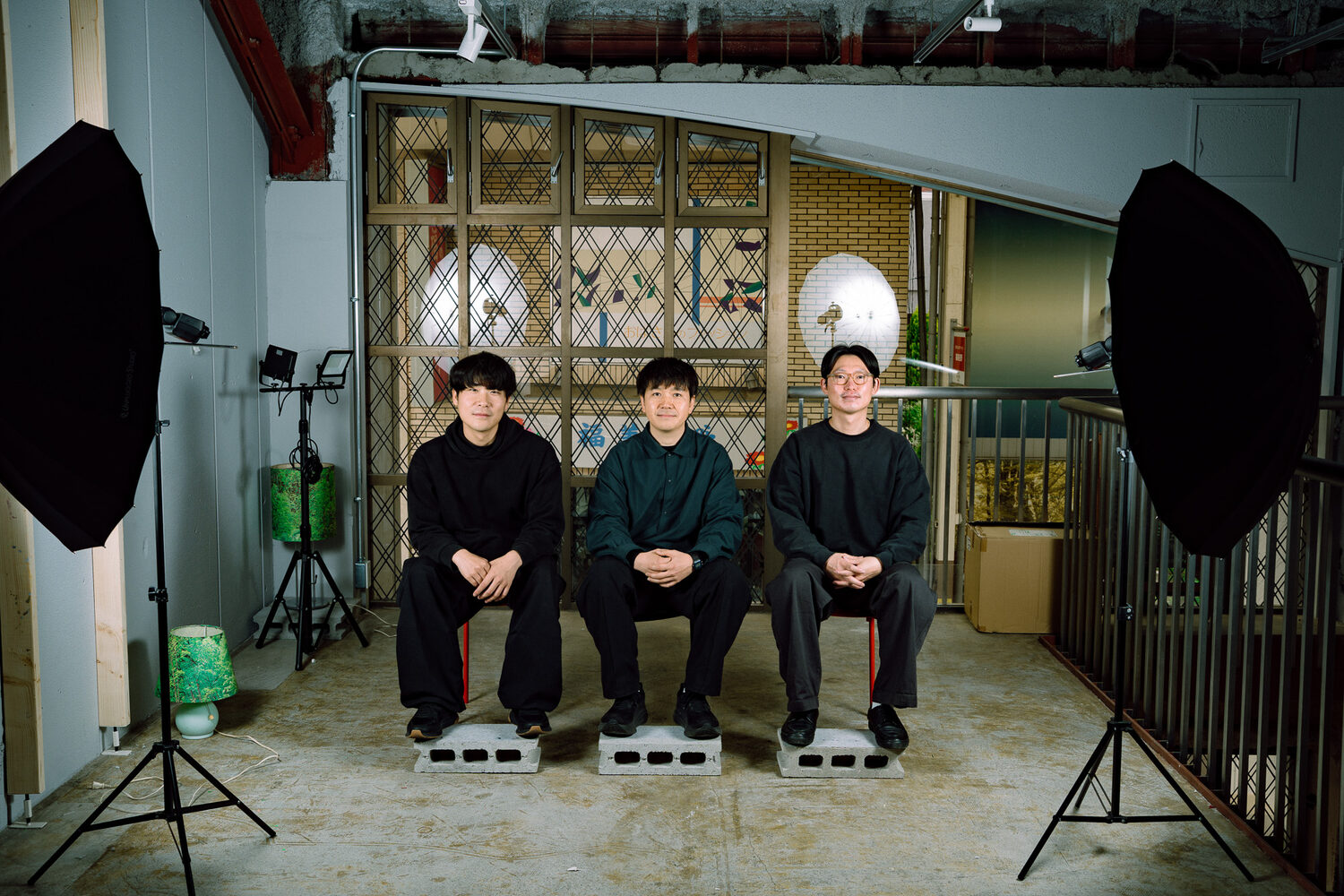
Recorded Thursday 6 August 2026 · Ryuta
Tanaka, Yoshiki Terasawa, Naoki Ichinei
Past the sleepless stretch
IchineiWell done on Season 1, both of you. How does it feel? For me it is simple: it was a good thing to run. I made friends every time, and I got to hear good stories. The walking is hard work, but the talk afterwards always runs hot.
TanakaHonestly, I am relieved. You never know whether the thing you pictured will land, or whether people will actually find it interesting. An idea being interesting and doing it being interesting are two different things, and without that second one you cannot keep going. If it were a one-off you could run it once and be done with it, good or bad. But I had already said we are doing nine of these. So if the first one flopped and nobody came to the second, I would still have nine to get through. There was a stretch where I was not sleeping well, actually. After the first session, once I had seen how people reacted, some of the weight came off.
TerasawaI was not that worried. It was a Machistant Tanaka production, so I assumed a reasonable number of people would turn up. What I did not expect was people with no connection to us at all picking up the information and coming along. That surprised me, and I liked it.
TanakaA lot of them we were meeting for the first time. The ones I had assumed would come, oddly, mostly did not. Instead they waved at us in the street, or stopped us to say they were following on Instagram. Everyone took part in their own way.
IchineiIs there anything you set out to do deliberately that you feel actually worked?
TerasawaThe radio calisthenics, surely. That was good. Pulling the cart uses muscles you never normally use.
IchineiTrue. And radio calisthenics is just slightly embarrassing, which made it work as a ritual. It says: something is starting.
TanakaDoing something a bit embarrassing, something you would not normally do, was one of the ideas from the start. The other things I am glad about are the punch lines and the little record we made after every session. Some people came because they had seen one and wanted to know what had happened last time.
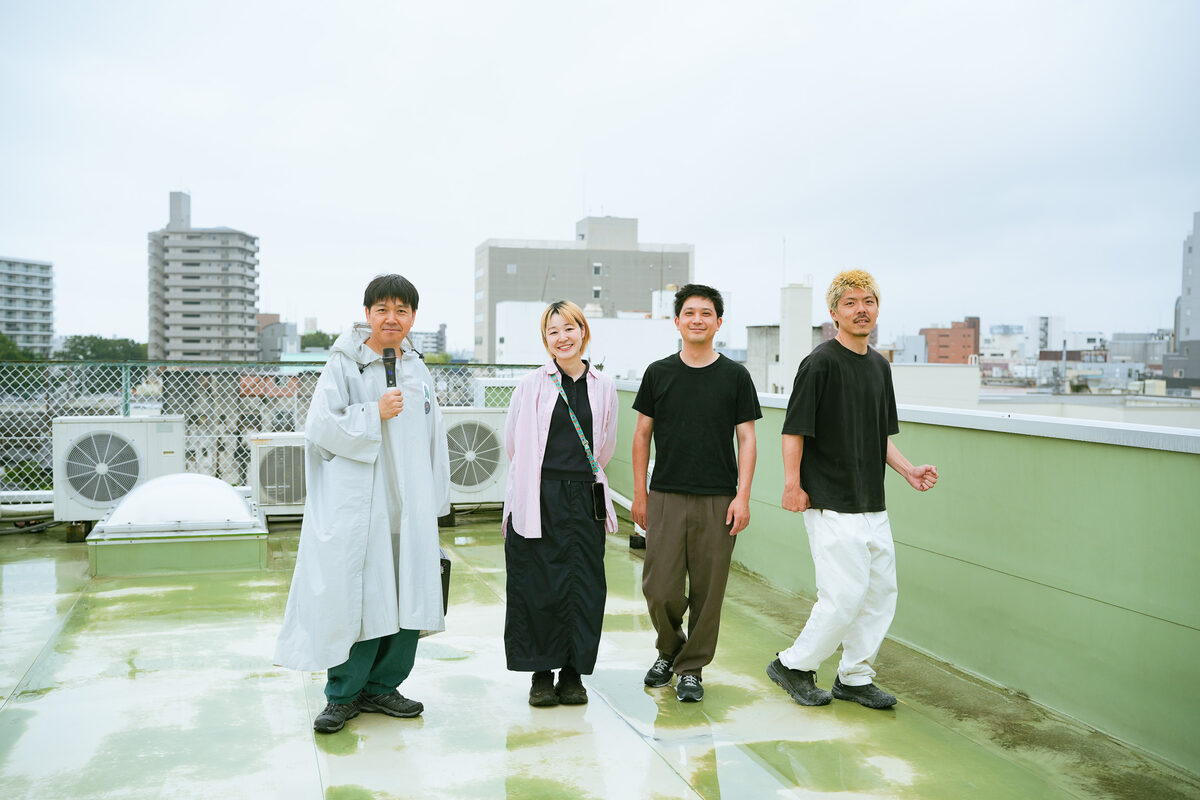
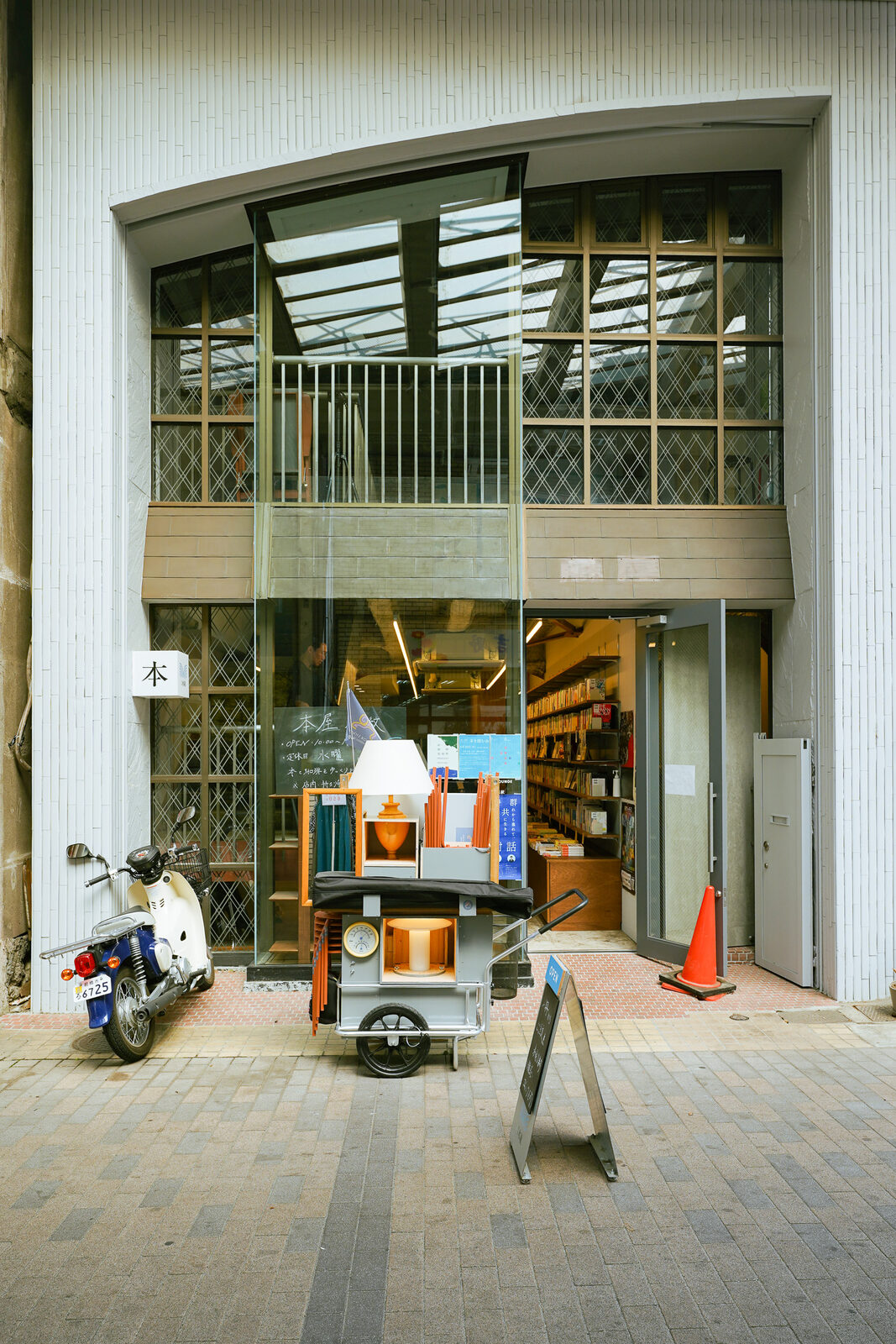
From the second session on, the group did radio calisthenics — the nationwide morning exercise routine — on the first floor above Books Suimon before setting off.
Walking without knowing why
IchineiWhat about doing the walk and the talk as a set?
TanakaIn my own work, talk first and then walk is the common one. You introduce the city and then everybody goes and looks at it. ARKHENODE was the other way round.
IchineiRather than deciding the destination and then going to see it, more like: walk without quite knowing why, and listen afterwards.
TanakaIf the talk comes first it turns into going to check on what came up, and I feel that makes it too earnest. Good as learning, perhaps.
TerasawaRight. Talk and then walk is easier to follow, but nothing beyond that happens.
TanakaAnd it was a small experiment, too: what sort of person turns up when what you are inviting them to is walking without knowing what it means?
IchineiIf nobody had come, the three of us would have been pulling the cart ourselves. I would have been fine with that.
TanakaAn event that consists of taking the cart out and putting it back 😂
TerasawaAnd we ran four sessions, two of them in the rain. I am grateful nobody shouted at us.
TanakaPeople were kind. Think about it: normally you would not want to put on a poncho somebody else has been wearing. But by then everybody was equally wrecked.
TerasawaI used to think I brought good weather. This taught me otherwise. The third session, the one I missed, had the best weather of the four.
IchineiThe fourth felt less like a walk and more like climbing a mountain. Rain, and that weight behind you. Nothing to do but keep going.
TanakaAnd yet the numbers barely changed between sessions. That was strange.
IchineiThat many people in that weather was remarkable. Normally you would just cancel 😂 A walk that is not at the mercy of the weather might be a small revolution.
Meeting again, through talk
TanakaAll of the guests are people whose businesses I helped open, as Machistant. I had seen plenty of what they do. But what they are thinking about while they do it, and what their roots are — that I was hearing for the first time. You cannot read what somebody is thinking off a menu. Getting at the words behind it was worth a lot.
TerasawaDid we ask them from the start to talk about their roots?
TanakaYes. Rather than what makes the shop appealing, I wanted to hear why they are standing in Maebashi now.
TerasawaThat is a good call. People running something in a city look very shiny, but when you ask about their childhood you find things in common, or the same thoughts. It is interesting.
IchineiKazumasa Sashide, who is one of our Season 2 guests, writes in On the Road 2: Super Well-being that relationships develop in the order being, becoming, doing. Adults normally meet each other at doing. You want coffee, so you go to the coffee shop — you can relate to people in a city as a function of that city. But before that there is meeting them as a person. That kind of meeting, or meeting again. Asking about roots turned out to be a very good way in.
This version of the city cannot be rebuilt
IchineiWas there anything that surprised you, that you only learned by doing it? For me it was that everybody loves the river. When I asked the guests how they like to spend a day off, most of them named the Hirose. Noguchi of CASA FRESCO gave it as a reason he opened where he did. As MEG said in the first session, maybe everyone is projecting their own river onto the Hirose. The other thing was how many guests spoke about shops that have gone, and with real sadness. That place closed, didn’t it. Lately good shops do keep closing because nobody is there to take them over. There are plenty of new shops in the centre, opened by people with a sense of purpose. And at the same time the city stops being the city it was. The more new things happen, the more I heard people missing what came before.
TanakaThose words come out precisely because each of them was attached to the place. But it is not only Maebashi — the same thing is happening everywhere. Within that, you could say Maebashi is unusual in that things are not only ending but also starting. Endings are sad, and yet it does not tip into negativity. Still, it is true that the air inside a shop that ran for decades cannot be made again. There is a real fragility in that. Especially here, because further back there were far more people on these streets than there are now. Having lived through that kind of change is part of what Maebashi is.
IchineiPeople in their sixties tell me that the centre of Maebashi was so busy your shoulders knocked against other people’s as you walked. That the newest photo booth in the region was in town, so everyone went. City boys and city girls came into this centre looking for the latest thing.
TerasawaI cannot picture this city being like that at all. It sounds made up. Like a film or a drama. It does not feel real.
IchineiSo you have a generation who lived through that, a generation who has only ever seen empty streets, and a generation who knows nothing before the Maebashi of today. Three sets of people with completely different ideas of what a city is, all involved in the same one. I am thirty-two, which puts me in the generation that saw the empty version. This city has genuinely changed in the last ten years.
Glad we built it, the mystery cart
IchineiThe fact that there was a cart was the strange part, and I think that was the good part. Seen from outside, it was the one thing that did not make sense. Walking makes sense, talking makes sense, the cart does not. Personally I think having an element nobody can explain matters.
TerasawaEveryone adapted to it so well. We never really explained it. High tolerance for being roped in 😂
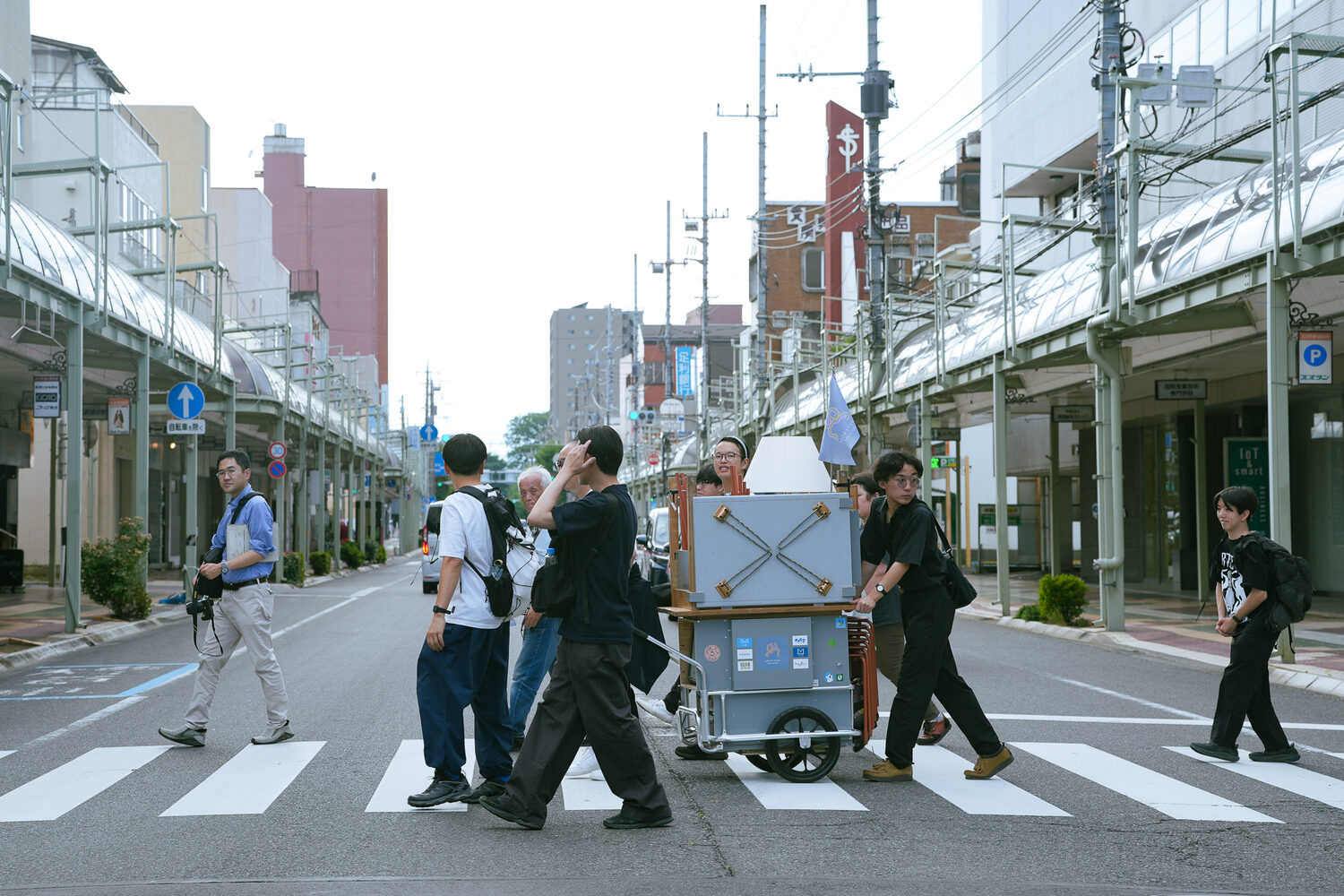
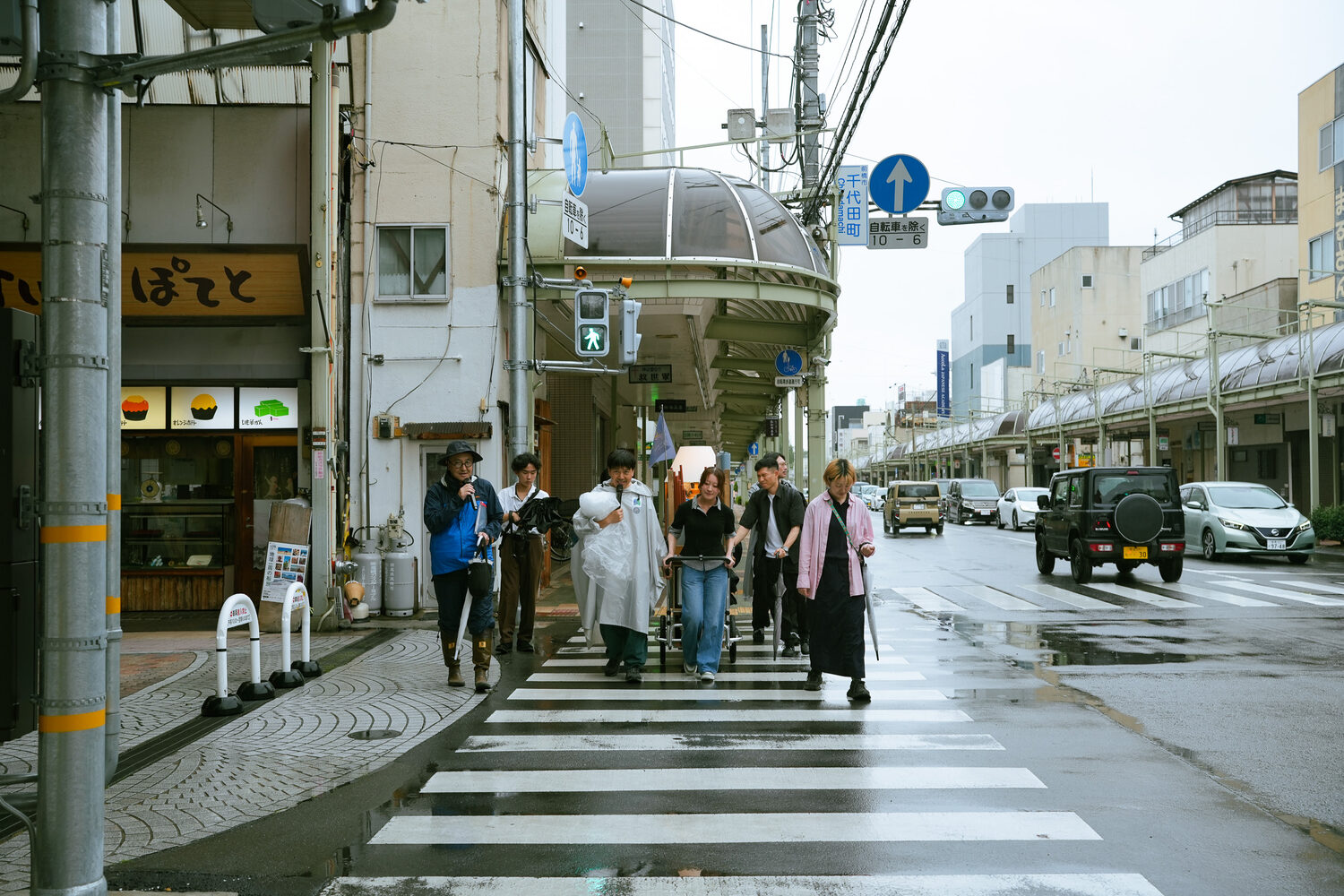
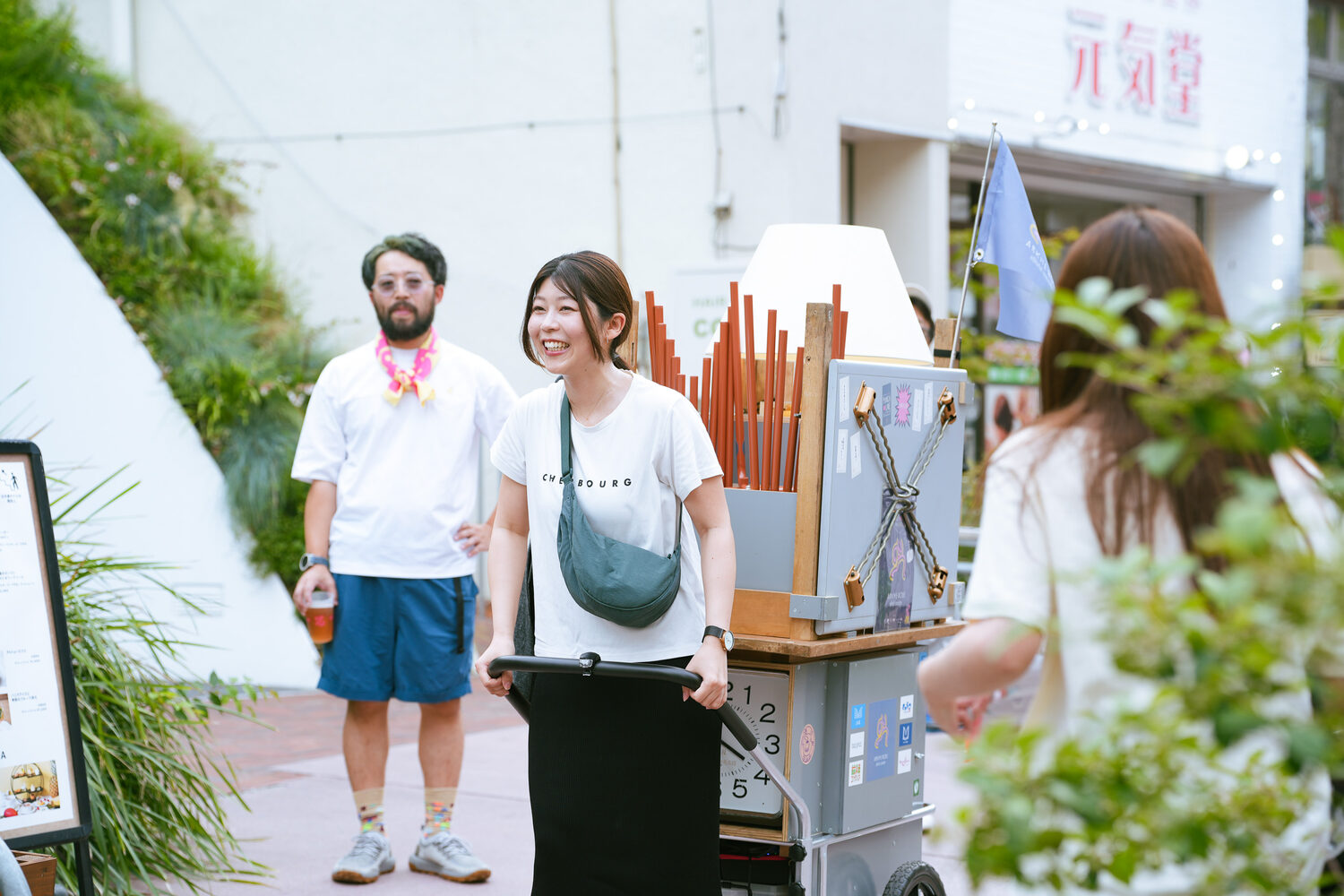
TanakaWhat I like is that the cart has no engine and no brake. You have to manage the speed, the camber of the road pushes you around, rough surfaces are miserable. Walking on its own you barely notice any of that, but pulling the cart it comes up through your hands into your whole body, your legs especially. You feel the city physically, so the road surface reaches you very directly. A bicycle cushions everything; this thing has puncture-proof tyres, always rock hard, so it bounces. And it is so heavy that on a slope you have to be careful it does not run away from you.
TerasawaIt is a machine for letting the city act on you.
IchineiA walk whose purpose is simply to walk together was a new idea, I think. And for that you did need the cart. It gave us a pretext for walking as a group, and walking slowly.
TanakaWe always meet in front of Books Suimon, and the people who live around there had clearly been wondering what it was. There is a boutique right opposite Suimon. I had barely met the owner, and the other day she came straight over — ah, this! I thought you were up to something interesting. What is it? I work on the city centre full time as Machistant, but I rarely have professional reason to deal with the long-established shops. I get to speak to the trade association board, but hardly ever to an individual owner. So being spoken to like that was a real opening. And that she found it fun was a good day for me.
IchineiWhen you first brought this to Terasawa and me, you already had the cart as an idea. Why a cart?
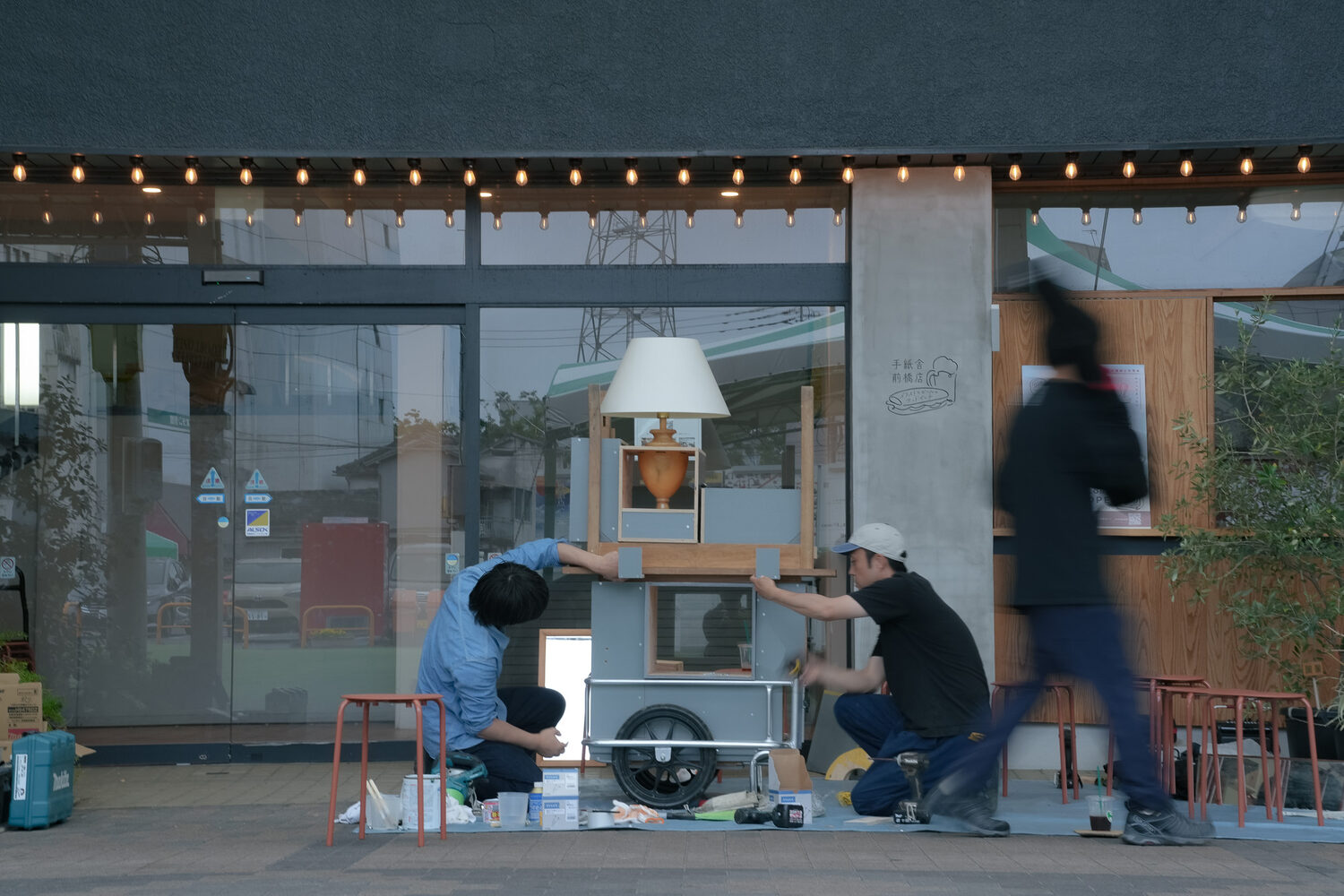
TanakaA cart is a tool for moving easily and I had always been interested in them. I had built one myself once that could be taken apart, so they were familiar. And there is a book, Nihon no Machi de Yatai ga Odoru — carts dancing in the towns of Japan — which is well known in that world. I remembered its examples of carts changing the places they stood in. Early on I did not have a clear picture of what functions the cart should have. But I wanted anyone who saw a group of people pulling it to think: right, the art festival is on. In the end it became a perfect cart, carrying both a function and a purpose. Plenty of people helped with the painting and the assembly, too.
IchineiMy keyword for the past year has been force of presence over ability. As technology spreads, AI included, the gap in ability between people closes. Writing as a job really is disappearing, because AI has raised everybody’s writing to a level. If you ask how you differentiate yourself inside that, the answer is not ability but presence. And to have presence it helps a great deal to be physically large, or to move oddly. On that count, having this cart mattered. Not just we do city walks, but the force of an object being there. A crowd of people trudging through rain is force too.
TerasawaPut like that, it is quite a physical thing we made.
IchineiIt really is. Being exhausted together is an experience worth having. Like a sauna and a cold plunge.
It starts with “what is that?”
TanakaBecause it was physically hard, I remember the faces of the people who came. I think we would recognise each other somewhere else.
IchineiBeing able to make an acquaintance from zero as an adult is rare.
TanakaAnd acquaintance is exactly the level. Not strangers, but you do not know what they do for a living.
TerasawaThere were probably quite a few people taking part without really knowing what sort of gathering ARKHENODE is. Then again, we do not know what is going to happen either.
IchineiWhen somebody asks what this is, all we can say is: work it out yourself 😂
TanakaThe copy is good, though — Wander first. Meaning comes later. Let a mystery cart take you along, and enjoy not understanding. Most events say: everybody please come.
IchineiCalling it mystery ourselves was the right move. Somebody asks what it is, and we do not know either.
TanakaI still have not settled on how to describe the cart to people outside. Is it odd to call it mystery ourselves? But having a cart at all is not a normal state of affairs, so writing pulling a cart flatly felt wrong too.
TerasawaMystery cart might be about right.
TanakaFrom now on we put mystery in, with confidence.
IchineiCome to think of it, for something we are this fond of, the cart does not even have a name.
TanakaI felt that if we called it something like ARKHENODE No.1, something would be over.
TerasawaIt may be close to how it is for people out with a child. With a child you can start from the child, even with someone you have never met. Just having the cart shortens the distance.
IchineiAdults need a reason to start talking. Without a child or a dog in between, all you can manage is how’s work these days.
TanakaBecause you cannot tell what the cart is at a glance, the conversation can start from what is that? It gained stickers and functions week by week, and I think that generated conversation too.
It does not have to be a cart
TanakaIn most places people assume the street in front of the station is the centre of town. In Maebashi it is not, so young people often end up believing there is nothing in the centre of Maebashi. Nobody teaches you at school what is happening in Gunma’s towns right now.
IchineiHonestly, I only became able to walk ten or fifteen minutes from the station once I started coming into central Maebashi for work and for fun 😂 Before that I was deep in car culture and would drive to a convenience store three minutes away. There are a lot of people like that. Think about it plainly and that is far too little walking, so: let us walk about this much. Our literacy for walking could stand to be a bit higher.
TanakaLately there are these things called personal mobility devices. Segway-like things, self-driving things. They are convenient. All over the place people are researching how much travel time can be cut, how much psychological distance can be shortened. Look at ARKHENODE as mobility and the cart makes the walking take longer, and doubles the excitement in exchange. Not we made it quicker and more convenient but it took twice as long and I have more friends.
IchineiA machine for amplifying the time and the quality of walking.
TerasawaMoving slowly is the richer thing, in the end. Walking is worth more than it was.
TanakaIt is the opposite of watching video at double speed. In that sense we may be making a small dent in the world.
TerasawaWalking a city was never meant to be something you are hurried through. Hurrying through a city is just transport. I would like to rethink what a city walk is.
TanakaThe way you run to train your body, you could walk slowly to train your head and your heart. Put that way, we do not need to be attached to the cart. Stilts would do. Deliberately walking slowly sounds like enough of a project on its own.
A hypothesis about Maebashi
TanakaSeason 2 is an open editorial meeting, so I want to get at the personal side of each guest, including why they became an editor. As little preparation as possible, straight into conversation. There is a proper talk event afterwards, so I would rather use this part for what will not come up there.
IchineiI want to take the Season 2 guests’ views and end up with a hypothesis about Maebashi. At the start of Season 2 it will only be a question, and I want to put it to each of them. For example, it turns out that the river is one of the keywords for this city centre. So I want to ask them: in the cities you have watched, or the cities you work from, is there anything that plays the part the Hirose plays here? It might be a mountain, or a road, or a shop. If many people name the same thing, that thing is part of what makes the place itself, and may be why people gather there. I think there is a clue in it.
Afterwards
The title of this book, A Strange Mobile Stall Strolling Through the
City, comes from a line written by a reporter at the Jomo Shimbun. The paper
came along on the first city walk and ran an article on 14 June. The headline was
“strange cart walks the streets.” All three of us groaned at how good
it was, and it stayed with us. When it came to naming this book after the
roundtable, nothing we came up with had the right temperature. In the end we
could not forget that headline, asked permission to borrow it, and were kindly
given it.
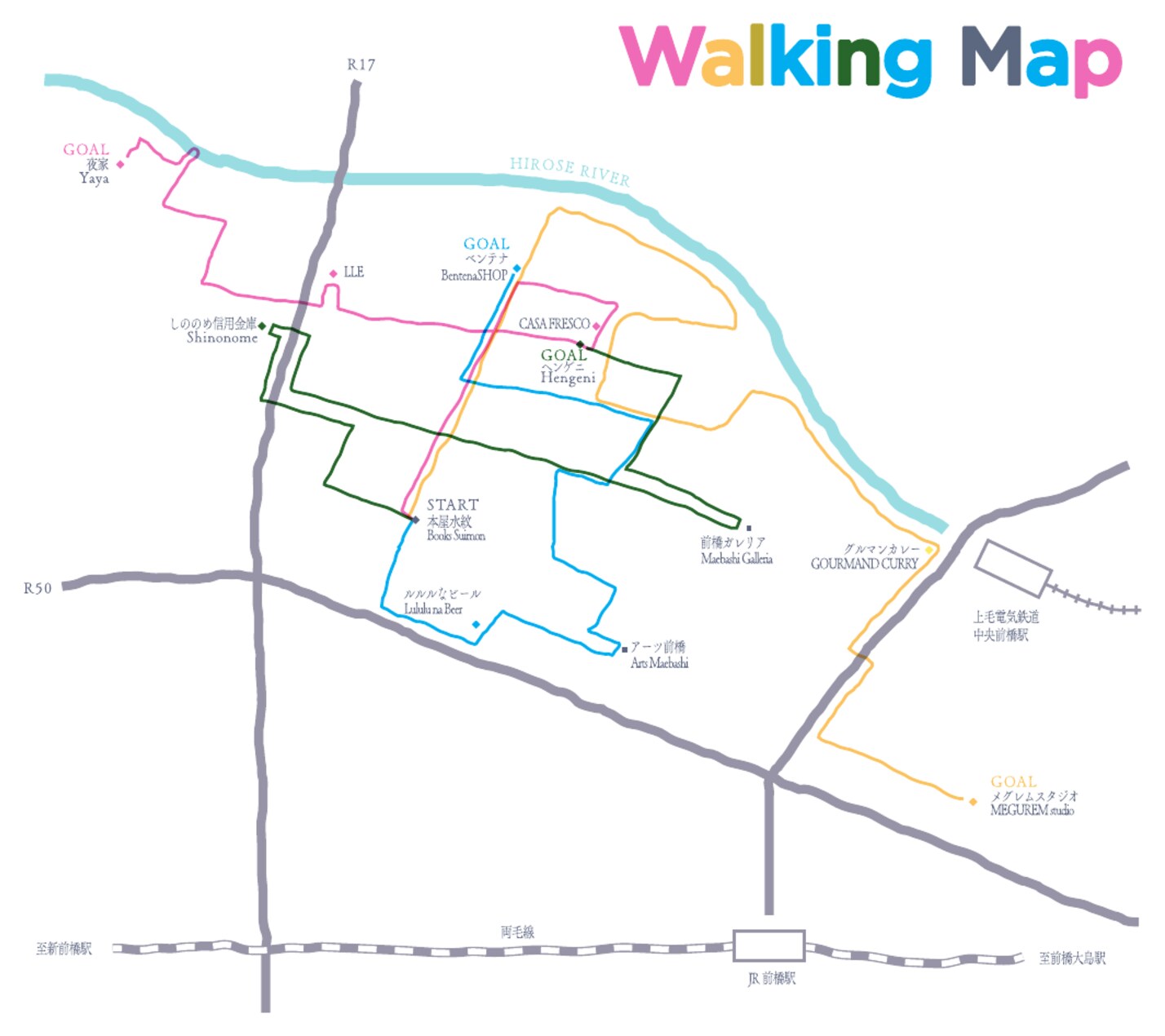
Walking map
Four routes, all starting at Books Suimon
The four routes through central Maebashi. All start at Books Suimon.
Session 1 → Megrem studio
Session 2 → Yaya
Session 3 → Bentena SHOP
Session 4 → hengeni
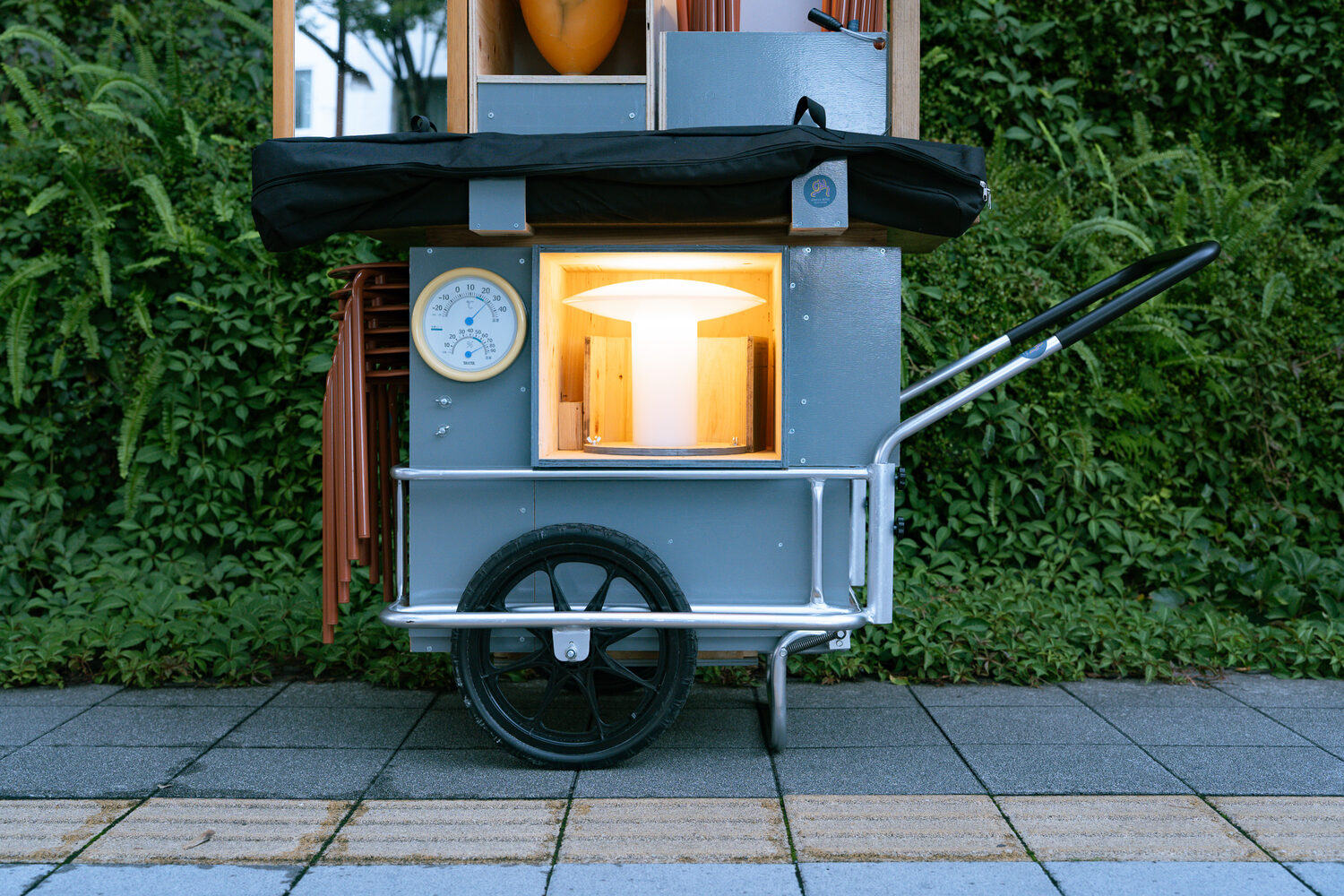
The cart
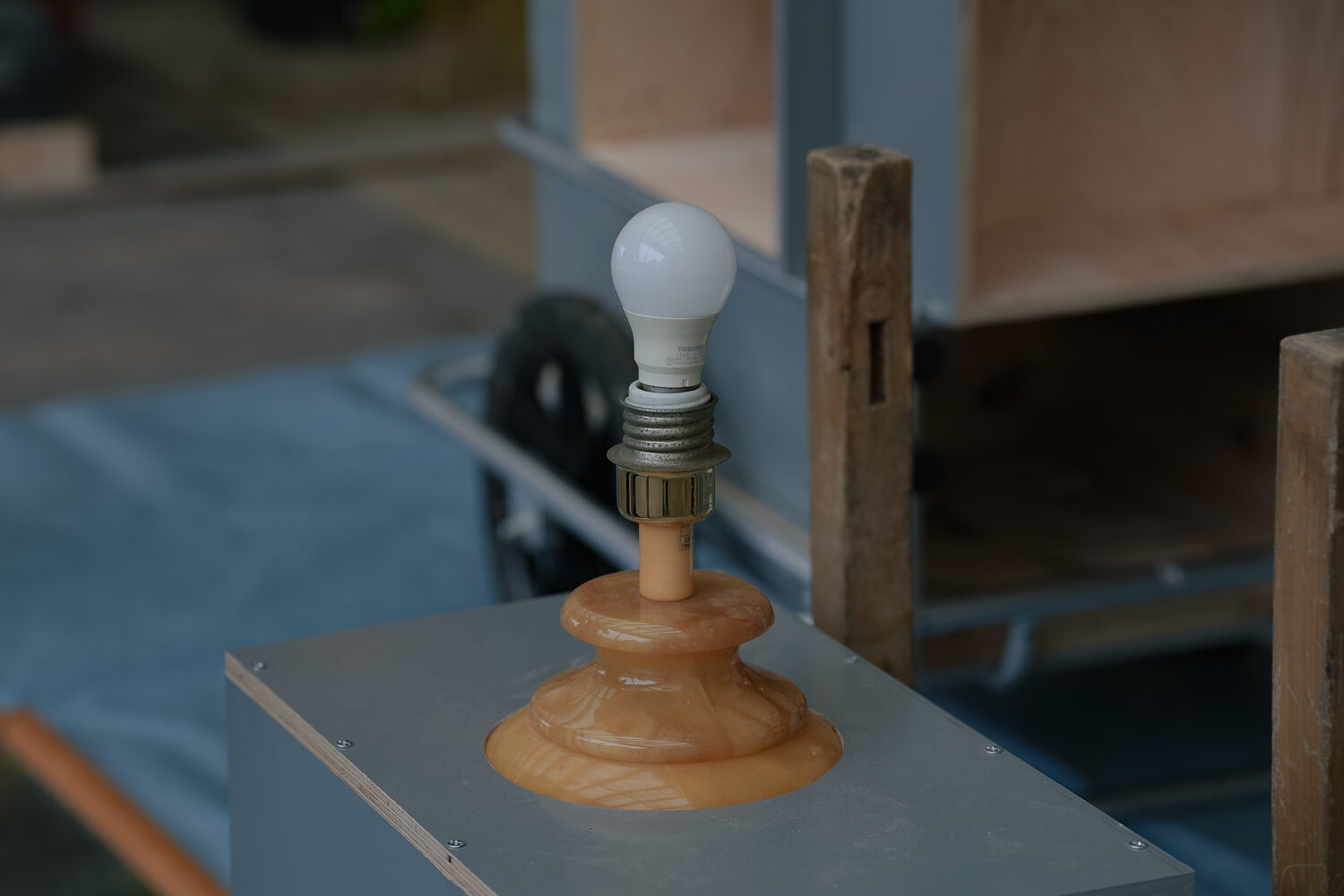
A chair, a speaker, a lamp. All of it loaded on, and everybody
pulling, and walking, and walking.
Punch lines
Lines that came out during the talks
Session One · The edge of the city, the riverside, music
“Maebashi smells of culture.”
MEG, Megrem studio
“Break through on the one thing you love.”
Yasuhiro Kondo, Gourmand Curry
Session Two · An architect and a restaurateur
“Maebashi is dense.”
Yuto Kogure, AANE / IINE
“The city is enjoying itself.”
Yusaku Arai, AANE / IINE
“Everything except the money is one hundred per cent me.”
Minami Tamahashi, Hazumi
Session Three · Involved since they were students
“I run Lululu so the energy keeps passing on.”
Yakuto Takeuchi, Lululu na Beer
“I want to leave traces of the people I looked up to.”
Tomohiro Okada, MaebashiWorks / tos / Bentena SHOP
Session Four · The Ura-Benten counterattack
“Trial and error at one hundred per cent purity.”
Shintaro Kanayama, hengeni
“A place where you accidentally meet all sorts of adults.”
Anna Kanayama, hengeni
“The back in Ura-Benten was the good part.”
Yasuhira Noguchi, CASA FRESCO
Column
Save Data for City
Text by Naoki Ichinei
Walking keeps turning up as a theme lately. Part of that is presumably the act
of walking being reconsidered on its own terms. But I suspect it is also that a
lot of people have started to notice value moving towards the things you cannot
get easily, the things that are a bit of a nuisance.
Generative AI, large language models in particular, leads us to the right
answer. Now that it is easy to be handed the result without going through the
process, carrying on with something you do not understand gets steadily more
painful.
I think the same thing is happening to how we meet people. Once you are an
adult you cannot meet anyone without a reason. Being taught something, asking for
a piece of work — the business comes first and the relationship starts from
there. With ARKHENODE I wondered whether we could meet some other way.
Each session is a city walk and a talk, three and a half hours together. Long
enough that you regret signing up casually. On top of that you are made to help
pull a heavy cart. It is not a normal event. Nobody is sure what is going on, and
if you ask the staff they will not tell you, because we are not sure either. And
yet, when you do something exhausting alongside somebody without either of you
understanding it, you end up friends. As I remember it, that is how friendships
worked when we were children. You do not connect through meaning. Meaning appears
after you have connected.
After every session I also made a small booklet, the session record. Nobody
asked me to; I did it on my own, and the reason was of course to reduce my own
homework and make life easier later. From the second session they were left at
Suimon, where we meet, and at other shops we have some connection with. Watching
the records add up one by one, I felt that ARKHENODE — something I still
cannot put into settled words — was taking shape right here.
Walking and making a zine are both physical. They take time, they tire you
out, they occupy space. They cost something simply by existing. Which is exactly
why they press on us, who also exist physically. We cannot postpone what is
right in front of us.
People keep saying that a city’s metabolism needs both wind and soil.
Soil is the local players and local values; wind is the people and ideas arriving
from outside. In ARKHENODE, the local guests we listened to in Season 1 are the
soil, and the editors we welcome from October are the wind. Seen that way, what
happened in Season 1 may have been the tilling of a field, so that Maebashi’s
next seeds have somewhere to grow.
You move your feet and you move your hands. Along the way you ask for help,
you gather people, and each of you goes on towards what you were heading for. I
fairly seriously believe the future of a city is at the end of that. Whether
ARKHENODE can become one of its save files is up to Season 2.
Season 2
Five editors, October to December 2026
ARKHENODE is a participatory editing project: we pull the cart through the
city, build up talks with our guests, and gather the record into a zine. In
Season 1, across June and July, participants helped pull the cart around the
centre while we heard the stories of shop owners and makers. In Season 2 we
welcome five editors who work on regional editing and local projects across
Japan. Over five sessions between October and December we move through the city
with them and look at how each has edited the places and people they work with.
Out of the offhand conversation around the cart, we look for a clue as to what
editing a city actually means. Each session is recorded, and the zine gathering
all of it is due next spring.
3 Oct · Manazuru Publishing
Shun Kawaguchi
Editing, publishing and the town-as-inn
Born in Yamaguchi in 1987. Moved to Manazuru, Kanagawa, in 2015 and founded Manazuru Publishing under the idea of a publisher you can stay the night in. Editor-in-chief of the magazine Nichijo; director of the Japan Machiyado Association. Grand prize, Local Republic Award 2019.
24 Oct · Sotokoto
Kazumasa Sashide
Soft infrastructure 2026
Born in Gunma in 1969. Editor-in-chief of Sotokoto and representative director of the Japan Kankei-jinko Association. Worked on Outdoor and edited Rod and Reel before his present role. Sits on Gunma’s tourism council, teaches on regional academies in Shimane, Fukushima and Akita, and advises national ministries. Creator for the Japan Pavilion at Expo 2025 Osaka. His latest book is On the Road 2: Super Well-being.
7 Nov · SAN, Kamifuru
Rikako Kanazawa
The landing where we enjoy the local
From central Niigata. After law school she worked on the magazine Tokyo Graffiti and then at the advertising production company amana. Returned to Niigata in 2021, after ten years away, to help start SAN — a hundred-year-old nagaya in the Kamifuru district turned into a mixed-use building. Opened the inn ODO above the Kamifuru shopping street in 2026.
28 Nov · for Cities
Yukako Ishikawa
Cities around the world, and the Maebashi she keeps returning to
Urbanist and experience designer. Works under the motto that we should use our cities ourselves, setting up small citizen-led activities in Tokyo, Cairo, Ho Chi Minh City and elsewhere. Co-representative of the urban experience design studio for Cities, which runs the platform forcities.org and the Urbanist School. Founded the community spaces watage in Kanda and nae in Nishi-Shinjuku.
12 Dec · Huuuu
Kakijiro Tokutani
What exactly does an editor edit in a city?
Born in Osaka in 1982, lives in Shinano, Nagano. President of Huuuu. Spent eight years as editor-in-chief of Jimocoro, reporting from all forty-seven prefectures, and now lives at 700 metres. Runs MADO, Pakaan Coffee Stand and (do) books, plus publishing and podcasts. Author of two books.
Afterword
Season 1 of ARKHENODE, the mobile open editorial meeting, is over.
I would be glad if some of what is written in this prototype zine — what
we on the editorial committee were aiming at, and what the local guests of each
Season 1 session had in mind — comes across to you, and lands.
At the end of last year, in fact, my first meeting with Director Miyamoto of
the Maebashi International Art Festival was about something like a tour
introducing the city. I could see why a guided walk during the festival would be
useful, but I could not picture myself leading participants around like a coach
guide. I started thinking about whether we could just wander the way I normally
do, and out of that came building a mystery cart and asking shop owners about
their roots. The result is a project that may or may not introduce the city at
all.
Then, wanting to leave a record of it, I remembered the sort of zine I cannot
stop buying — zines that observe a city. Phrases that would never make it
into a guidebook produced by the government, graphic design that catches the eye,
photographs with the feel of the room. If we could put this project together like
that, it would be perfect.
So I took it to Terasawa, the designer, and Ichinei, the editor and
photographer, and the ARKHENODE editorial committee was formed, and the project
began. Enormous thanks and respect to the two of them for agreeing to it.
From here we go through Season 2 and into making the full edition of the zine.
How will Maebashi’s city centre, and this project, and this zine, look to
the distinguished editors joining us for Season 2? And how will this city change
under the large impact of an art festival? I intend to spend this period looking
forward to it, and at the end of the year to sit down with the other two and
agonise properly over the full edition. Please look forward to spring 2027.
Ryuta Tanaka
Credits
ARKHENODE
Planning and construction: Ryuta Tanaka and the ARKHENODE editorial
committee
Editorial committee
Naoki Ichinei — editing and photography, machino works
Ryuta Tanaka — planning and accounts, Machistant
Yoshiki Terasawa — design
Production support
Toshikazu Kojima — the cart
Masayuki Iwata — music
With thanks to
Books Suimon, Maebashi Conditioner, Mulberry Shobo, Hon no Ie 2, hengeni,
butterflower
Photographs by Naoki Ichinei. Printed edition designed by
Yoshiki Terasawa; the layout is not reproduced on this page.